Occupational Therapy
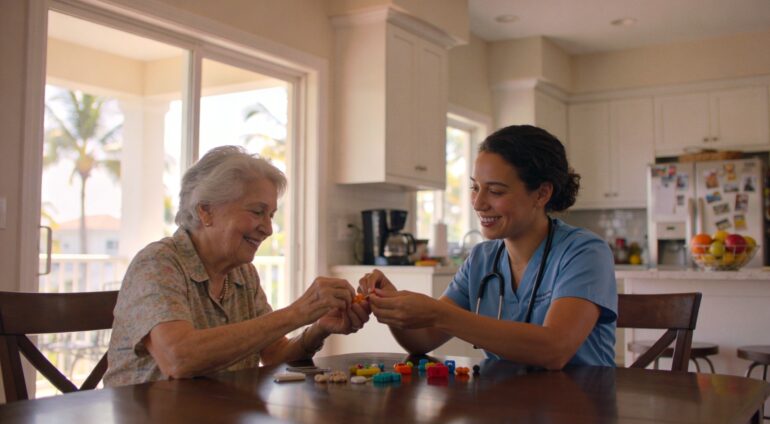
Occupational Therapy
Helping patients live safely and independently at home.
Our licensed occupational therapists work one-on-one with patients in their homes, focusing on the daily activities that define quality of life. From bathing and dressing to home safety and adaptive strategies, every visit is designed to keep patients functional and in place. Fully covered under Medicare Part B.
What We Address
Focused on the activities that matter most.
Occupational therapy helps elderly patients maintain the functional abilities they need to live at home safely. Our therapists assess each patient’s routines, environment, and limitations to build a plan that fits their real life.
Comprehensive evaluation of the home environment to identify hazards, recommend modifications, and reduce the risk of falls and injury. The therapist sees the space the way the patient uses it, not the way it looks on paper.
Training and adaptive strategies for dressing, bathing, grooming, toileting, and feeding. These are the tasks patients need to perform every day. OT helps them do so with greater safety, confidence, and independence.
Evaluation, recommendation, and hands-on training for assistive devices and adaptive tools. From grab bars to button hooks, the right equipment paired with proper technique can transform a patient’s ability to manage daily tasks.
Exercises and techniques to improve hand strength, dexterity, and coordination for tasks like opening containers, managing medications, buttoning clothing, and writing. Small gains in hand function make a significant difference in daily independence.
Techniques for managing memory challenges, sequencing daily routines, and maintaining the organizational skills needed for safe independent living. OT addresses the cognitive component of function, not just the physical.
Support for higher-level tasks that patients need to live independently: managing medications, using the phone, light meal preparation, managing finances, and navigating their community. These skills are often the first to decline and the last to be addressed.
Without intervention, daily life gets smaller.
Function Starts to Slip
Small things become harder. Buttons are frustrating. Getting dressed takes twice as long. The patient starts avoiding tasks they used to do without thinking.
The Home Becomes the Hazard
Without adaptation, the home environment works against the patient. Bathroom transfers become dangerous. Clutter becomes an obstacle. The space that should feel safe starts to feel risky.
Independence Erodes
The patient begins relying on others for basic tasks. Confidence drops. Activity shrinks. The gap between what they can do and what they need to do widens every week.
Higher Level of Care
The patient can no longer manage safely at home. They transition to assisted living, skilled nursing, or a long-term care facility. For many, that transition is permanent.
Why In-Home OT
The best place to learn daily living skills is where you live.
Occupational therapy is about function in context. When a therapist works with a patient in their own bathroom, their own kitchen, their own bedroom, the treatment directly translates to the tasks they need to perform every single day.
There is no simulation that matches the real thing. In-home OT means patients practice in the exact environment where it matters, with the therapist right beside them.
- Treatment in the actual environment where patients live and function
- No transportation barriers for patients
- One-on-one attention every single visit
- Fully covered under Medicare Part B
A clear process from the first visit forward.
The therapist completes a thorough assessment of the patient’s functional abilities, home environment, and daily routines. Safety risks are identified, baseline function is measured, and a personalized plan of care is created.
Regular visits focused on improving ADL performance, training adaptive strategies, and progressively building the skills patients need to remain safe and functional at home.
Every visit is documented with functional outcome measures. Reassessments ensure the plan stays aligned with the patient’s evolving needs and goals.
When goals are met, the patient receives recommendations and strategies for maintaining progress. If new challenges arise, a new episode of care can begin at any time.
Interested in bringing OT to your patients?
Whether you're a home care agency exploring a partnership or an occupational therapist looking for meaningful work, we'd love to connect.